Latest Insights & Industry Guides
Insights • Strategy • Technology • Franchise • Sustainability
How to Start an EV Charging Business in India: A Complete Guide for 2026
How to Start an EV Charging Station Business in India (2026)
Topics Covered In This Blog
EV Charging Business, the Next Big Opportunity in India
Imagine driving down an Indian highway and spotting more electric cars, scooters and buses than ever before. Yes, that’s the future, “TN government plans 20000 electric stations 2031”, and Electric vehicles are steadily becoming a part of everyday transportation. But as EV adoption increases, one important question follows: Where will all these vehicles charge?
This is where the EV charging station business in India enters the picture.
India's electric mobility sector is expanding, creating new opportunities for entrepreneurs, investors, property owners and businesses. According to government report VAHAN data, approximately 19.5 lakh electric vehicles were sold in India during 2024 alone, accounting for 7.44% of total vehicle registrations that year.
With more EVs entering the market, the need for accessible, reliable and well-distributed EV charging port is becoming increasingly important.
For entrepreneurs looking to enter the green energy and automobile sectors, starting an EV charging port business could be a promising and potentially profitable business in India.
Here is a checklist to consider before setting up an EV charging station,
- • How much does it cost to set up an EV charging station?
- • Which EV charging solutions should you invest in?
- • Do you need a government licence?
- • Are government subsidies available?
- • And most importantly, can an EV charging station generate consistent revenue?
Let’s Breakdown the EV Charging Station Business
Before investing your money, you need to understand how an EV charging business actually works.
An EV charging station is a facility where electric vehicle owners recharge their vehicle batteries using specialised charging equipment.
As a charging station owner or operator, you provide charging services to EV users Cdesigned for electric mobility.
However, an EV charging station business involves more than purchasing chargers and installing them in a parking area. It also requires suitable electrical infrastructure, charging management software, customer accessibility and efficient station operations.
Types of EV Charging Solutions
There are three common charging models worth understanding before planning your investment.
A. AC Charging Stations
AC chargers are generally suitable for locations where vehicles remain parked for longer durations.
They work particularly well in:
- • Residential apartments and housing societies.
- • Office buildings and IT parks.
- • Hotels and restaurants.
- • Shopping malls and commercial complexes.
AC charging solutions are often a suitable for businesses looking to install multiple charging points without investing heavily in high-power charging equipment.
B. DC Fast Charging Stations
DC fast chargers deliver power directly to an EV's battery, allowing compatible vehicles to charge considerably faster than conventional AC charging.
They are particularly suitable for:
- • Highways and expressways.
- • Fuel stations.
- • Busy commercial locations.
- • Urban transit corridors.
- • Fleet charging hubs.
For locations where drivers want to charge quickly and continue their journey, DC fast charging can be a valuable addition to the charging infrastructure.
C. Battery Swapping Stations
Battery swapping offers a different approach to EV charging.
Instead of waiting for a battery to recharge, users exchange their depleted battery for a fully charged one. This model is particularly relevant for certain electric two-wheelers and three-wheelers, including commercial vehicles operating on tight schedules.
The right EV charging technology depends on your target customers, location, investment capacity and business objectives.
Remember, the goal isn't to install the most expensive charger. It's to install the right charger at the right place.
The Right EV Charging Business Model
Choosing the right business model and location is essential for your EV charging station business, as both influence the investment, charger utilisation, revenue and long-term EV charging station ROI.
Popular EV Charging Business Models
A. Independent EV Charging Station
If you want complete control over your EV charging business, establishing an independent charging station is worth considering. You can purchase EV charging hardware, manage daily operations and generate revenue directly through charging fees.
This model gives you greater control over pricing, branding, equipment selection, customer experience, and business expansion. However, you'll also be responsible for site preparation, electrical infrastructure, charging management software, maintenance and customer acquisition.
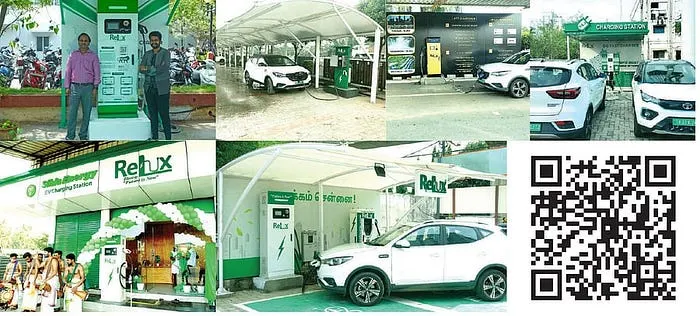
B. EV Charging Station Franchise
For entrepreneurs entering the EV industry for the first time, partnering with an established EV charging company can provide valuable operational and technical support.
Depending on the provider, an EV charging station franchise may include charging equipment, installation, access to a charging management platform, software integration, branding, maintenance and technical assistance.
thinks to check: before signing an agreement, carefully evaluate franchise fees, revenue-sharing arrangements, annual maintenance charges (AMC), software costs and contract conditions.
Always understand the investment and responsibilities involved rather than relying solely on projected returns.
C. Installing EV Chargers on Existing Property
Already own a commercial property, hotel, restaurant, shopping complex or parking facility? You can utilise your existing space to install EV charging stations without necessarily investing in additional land.
This approach can improve space utilisation, attract more customers, generate additional charging revenue and create partnership opportunities with nearby businesses. For property owners, it is also an opportunity to participate in the growing EV charging infrastructure market.
D. Highway EV Charging Stations
Highway EV charging stations serve EV owners travelling between cities and offer opportunities for operators/ EV charge station owners to attract transit customers.
A strategically located highway charging hub can combine DC fast chargers with AC charging points to accommodate different vehicle types and charging requirements.
EVERYTHING YOU NEED TO KNOW ABOUT SITES & CHARGERS
PROPERTY GUIDE FOR EV CHARGER
Before finalising a property, evaluate five factors:
- · Assess local EV movement and charging demand.
- · Ensure convenient entry, exit and sufficient parking.
- · Check sanctioned load, electrical capacity and grid connection requirements.
- · Compare nearby EV charging stations, tariffs and availability.
- · Consider upcoming developments, highway traffic and fleet operations.
A charger doesn't makes money, just by standing there. You must know your customers, choose the location wisely, and let demand guide your investment.
EV Charging Station Licences, Approvals and Government Subsidies in India
Licences and Regulatory Requirements (NO LICENCES REQUIRED)
According to the Ministry of Power's Guidelines for Installation and Operation of Electric Vehicle Charging Infrastructure, 2024, setting up and operating an EV charging station is a de-licensed activity in India. Individuals and private entities can establish EV charging infrastructure without obtaining a separate electricity distribution licence, provided they follow the prescribed guidelines.
Key requirements are:
- · Obtain an electricity connection from the local Distribution Company (DISCOM).
- · LT connections up to 150 kW are provided for EV charging stations upon application for a separate LT connection.
- · EV Supply Equipment (EVSE) must comply with applicable BIS standards.
- · Follow the Central Electricity Authority (CEA) safety and connectivity regulations.
DISCOM Connection Timelines
Under the 2024 guidelines, electricity connection timelines are:
| Location | Connection timeline |
|---|---|
| Metropolitan areas | 3 days |
| Other municipal areas | 7 days |
| Rural areas | 15 days |
| Rural areas with hilly terrain | 30 days |
| Where distribution mains extension or a new substation is required | 90 days |
Source : https://www.powermin.gov.in/static/uploads/2025/08/5804f7f17e764f9ba1951183379b8e31.pdf
A. Government Subsidies for EV Charging Stations: PM E-DRIVE Scheme
The Ministry of Heavy Industries introduced the PM E-DRIVE Scheme, allocating ₹2,000 crore specifically for public EV charging infrastructure, including EV Public Charging Stations (EVPCS), Battery Swapping Stations (BSS) and Battery Charging Stations (BCS).
Under the published subsidy structure:
| Category | Eligible locations | Subsidy |
|---|---|---|
| A | Eligible government offices, hospitals, educational institutions and government establishments | 100% upstream infrastructure + 100% EVSE |
| B | Government-controlled railway stations, airports, metro stations, municipal parking and public-sector fuel outlets | 80% upstream infrastructure + 70% EVSE |
| C | Other eligible locations, including shopping malls, market complexes and highways | 80% upstream infrastructure |
| D | Battery Swapping Stations and Battery Charging Stations | 80% upstream infrastructure |
EVSE refers to Electric Vehicle Supply Equipment. Subsidies are calculated against eligible costs and prescribed benchmark rates
B. Can Private Entrepreneurs Apply for PM E-DRIVE Subsidies?
According to the Ministry of Heavy Industries, eligible government ministries, Central Public Sector Enterprises (CPSEs), autonomous bodies, States, Union Territories and their public-sector undertakings can submit proposals through designated nodal agencies.
The February 2026 government clarification also recognises participation by eligible public and private entities in implementing EV charging infrastructure projects under the scheme. However, private operators must meet the applicable eligibility and implementation conditions; subsidies are not automatic for independent installations.
EV charging is licence-free, but it isn't regulation-free.
Get your DISCOM connection, electrical safety compliance and subsidy eligibility right before investing.
ESSENCE
The EV charging industry in India is opening doors for entrepreneurs, targeting 20000 charging stations by 2031, investors and businesses looking to participate in the future of electric mobility.
With increasing EV adoption, growing demand for reliable charging infrastructure and supportive government policies, starting an EV charging station business can be a promising long-term opportunity.
But here's something worth remembering, success in the EV charging business isn't about installing the maximum number of chargers. It's about making the right investment in the right location for the right customers.
Before getting started, understand your target market, evaluate your property's electrical capacity, compare AC and DC charging solutions, calculate your CAPEX and operating expenses, and develop a realistic revenue model.
Pay attention to charger utilisation, uptime, customer experience and long-term maintenance. These are the factors that can make a real difference to your EV charging station ROI.
And don't rush into expansion just because the market is growing. Start with a well-planned setup, understand how your customers use your charging station, and scale your infrastructure as demand increases.
At Relux Electric, we believe the future of electric mobility needs more than just charging equipment. It needs reliable technology, intelligent infrastructure and businesses built with the right vision.
Our advice? Don't just build a charging station to be part of the EV revolution. Build one that gives people a reason to come back.
The future is electric. Make sure your business is ready for it.
Your EV Charging Business Deserves a Partner Who Shows Up Every Single Day
At Relux Electric, we build reliable, high-uptime charging hubs with turnkey execution, smart CMS software, and full operational support across India.
Start Your Franchise Today