Latest Insights & Industry Guides
Insights • Strategy • Technology • Franchise • Sustainability
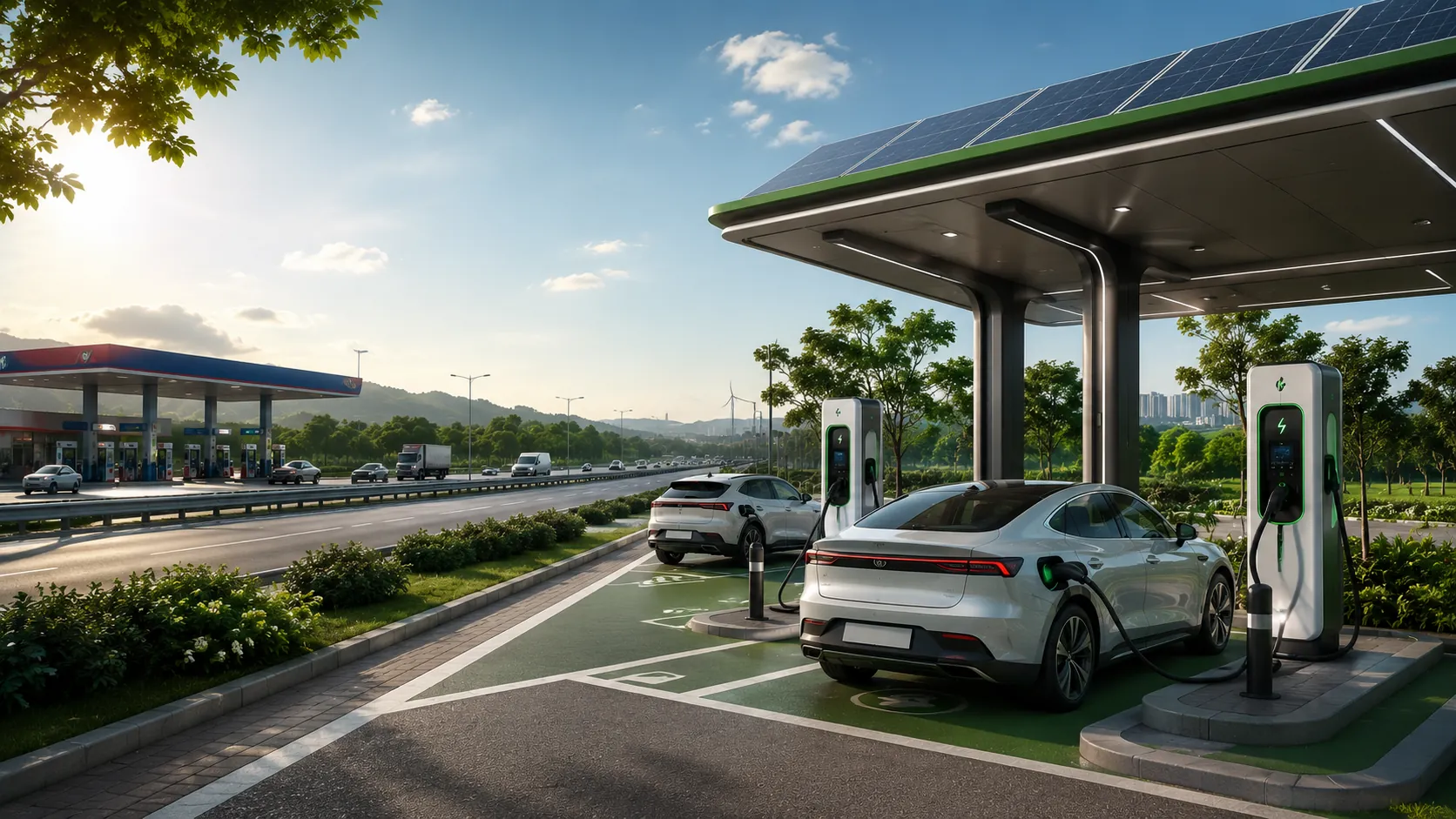
Will Ultra-Fast EV Charging Make Petrol Cars Obsolete?
Ultra-fast electric vehicle charging is changing one of the biggest arguments against electric cars, TIME. For decades, petrol cars have held a clear advantage. Pull into a station, refill in a few minutes, pay, and drive away. Electric vehicles, by comparison, traditionally required hours of charging. That gap is now shrinking fast. Ultra-fast chargers delivering 150 kW or more can already add substantial driving range in minutes, while the newest high-voltage EV systems and battery technologies are pushing charging times toward in ideal conditions. Megawatt-scale charging once mainly associated with heavy trucks is now entering the passenger-car market. So, will ultra-fast charging kill the petrol car?
Not overnight. But it could remove one of petrol's strongest remaining advantages.
Topics Covered In This Blog
What Is Ultra-Fast EV Charging?
Charging speed is measured in kilowatts (kW). The higher the power output, the faster an EV can potentially receive electricity. The International Energy Agency generally classifies public chargers above 150 kW as ultra-fast, while the newest generation of chargers can deliver 250 kW, 350 kW and, in some cases, megawatt-scale power. However, there is an important catch, a charger can only deliver power as fast as the car can accept it. A 350 kW charger does not automatically mean every EV charges at 350 kW. The vehicle's battery chemistry, charging architecture, temperature and battery state of charge all influence real-world charging speeds. Think of it like internet speed, buying the fastest broadband plan does not help much if your device cannot handle it.
The 10-Minute Charging Revolution
The latest EV technology is attacking charging time from several directions. Modern vehicles are increasingly using 800-volt and higher electrical architectures. Higher voltage allows more power to be transferred efficiently while reducing some of the heat-related challenges associated with extremely high currents. The technology is moving quickly. The first 1,000-volt EV models appeared in 2025, while several manufacturers announced charging systems capable of adding enough energy in less than 10 minutes under suitable conditions.
The basic equation is simple:
More charging power + better batteries + higher voltage = less waiting.
That matters because consumer behavior often revolves around one question: How long will I have to stop?
If an EV can recover hundreds of kilometers of range during a coffee break, the experience starts to look far less different from stopping for petrol.
Why Charging Speed Could Change Everything
The biggest psychological advantage of petrol has never been the engine itself. It has been convenience. Petrol is fast, predictable and supported by an enormous refueling network. Ultra-fast charging directly challenges the first part of that equation. According to the IEA (International Energy Agency), a compatible EV charging for 15 minutes at a 150 kW charger can gain close to 180 kilometers of mixed driving range. The newest systems are pushing considerably beyond traditional charging performance. For long-distance drivers, this changes the conversation. Instead of planning an hour-long charging stop, a driver may eventually stop for coffee, food, a restroom break, or a short rest, and return to a vehicle with enough energy to continue the journey.
That is the moment charging stops feeling like a major interruption and starts becoming part of the travel routine.
But Ultra-Fast Charging Is Not the Same as Petrol Refueling
Here is where the hype needs a reality check. EV charging does not work exactly like filling a petrol tank. Charging speed usually follows a charging curve. An EV may accept very high power when the battery is relatively low, but the charging rate typically decreases as the battery fills. This means a vehicle advertised with extremely high peak charging power will not necessarily maintain that speed throughout the entire session. Temperature also matters. A cold battery, a hot battery or an improperly conditioned battery can charge more slowly. So when manufacturers advertise dramatic charging times, those figures generally depend on favorable conditions.
The smart way to compare EV charging is not simply asking:
“How fast is the charger?”
The better question is: “How much useful range can this car add during a realistic stop?”
That is where ultra-fast charging becomes genuinely important.
The Infrastructure Problem
Fast charging technology is impressive. Building enough of it is the harder part. A petrol station can store fuel and dispense it rapidly. An ultra-fast EV charging hub needs something different, large amounts of electrical power available exactly when customers need it. The IEA (International Energy Agency) warns that widespread ultra-fast and megawatt-scale charging can create significant pressure on electricity grids, particularly during periods of high demand.* *A single high-power charger is one thing.* *A busy station with multiple vehicles charging simultaneously is another.
This creates several challenges:
-
A) Grid capacity
Local electricity networks may require expensive upgrades to support multiple high-power chargers. -
B) Peak demand
Many vehicles charging at the same time can create sharp spikes in electricity demand. -
C) Installation costs
Ultra-fast charging equipment and the required grid connections are generally more expensive than slower chargers. -
Reliability
A charger that exists but does not work is not infrastructure. Reliability, payment systems and maintenance are just as important as raw charging speed.
The future charging station may therefore look more like a traditional fuel station, combining grid connections, battery storage, smart software and multiple charging speeds.
The Hidden Truth, Most Charging Will Still Happen Slowly
Ultra-fast charging gets the headlines. Home charging does the everyday work. The IEA (International Energy Agency) estimates that EV owners globally charge privately at home or work, the majority of the time, while public fast charging accounts for a much smaller share of charging sessions. That means the perfect EV ecosystem is unlikely to depend entirely on ultra-fast chargers. Instead, different charging speeds will serve different purposes:
- Home charging - Daily convenience.
- Workplace charging -Convenient top-ups during the day.
- Public fast charging -Longer stops and urban charging.
- Ultra-fast charging Long-distance travel and quick energy replenishment.
In other words, ultra-fast charging will not replace slower charging.
It will solve a different problem, the moments when drivers cannot afford to wait.
Are Petrol Cars Becoming Obsolete?
Technologically, the pressure on petrol cars is growing. Electric vehicles already offer several structural advantages:
- Higher energy efficiency
- Lower maintenance requirements due to fewer moving mechanical parts
- The ability to charge at home
- Potentially lower operating costs depending on electricity and fuel prices
- Zero tailpipe emissions during driving
The IEA reports that, in many markets, battery electric vehicles offer lower running costs than comparable petrol cars when primarily charged privately. However, relying exclusively on expensive public fast charging can reduce or even eliminate that cost advantage.
That distinction is important. Ultra-fast charging makes EVs more convenient, but convenience can come at a premium.
The Biggest Advantage EVs Have Over Petrol Cars
Here is the plot twist, EVs may not need to copy petrol cars completely.
A petrol car must visit a fuel station. An EV can potentially receive energy while it is already parked. At home, at work, in a shopping centre or at a public parking facility, charging can happen while the driver is doing something else. This is a fundamentally different model. Petrol refueling is an additional task. Home EV charging can be a background activity.
Ultra-fast charging becomes important mainly when drivers travel beyond their normal routines. That combination, slow and convenient charging most of the time, ultra-fast charging when needed, could be more powerful than trying to make every EV charging session identical to a petrol stop.
The Battery Question
Faster charging creates another challenge, battery health. Pushing large amounts of energy into a battery, generates stress and heat. Frequent ultra-fast charging may contribute to faster battery degradation, although the real impact depends heavily on battery chemistry, thermal management and how often high-speed charging is used. Battery technology is improving rapidly. The IEA (International Energy Agency) reports that battery pack energy density has increased substantially over the past decade while battery prices have fallen dramatically. New battery chemistries, improved cooling systems and advanced power electronics are helping manufacturers increase charging speeds without simply sacrificing battery performance. The future battery will not just need to store more energy. It will need to accept energy faster, manage heat better and survive thousands of charging cycles. That is a serious engineering challenge, but the industry is aggressively pursuing.
Why Petrol Cars Will Not Disappear Immediately
Even if EV charging becomes as quick as refueling, petrol cars will not suddenly vanish. There are billions of reasons.
-
A) Existing vehicles
Hundreds of millions of petrol and diesel vehicles are already on the road. Cars typically remain in service for many years. -
B) Infrastructure differences
charging networks are expanding rapidly, but availability remains uneven across countries and regions. -
C) Vehicle affordability
The upfront price of EVs remains a major factor in many markets. -
D) Special use cases
Long-distance travel, remote areas, towing, extreme climates and certain commercial applications may continue to favor combustion engines or alternative technologies for some time. -
E) Consumer habits
Cars are not replaced every year. The transition depends on purchasing cycles, policy, infrastructure and economics.
So, no ultra-fast charging alone will not make petrol cars obsolete.
But it can remove one of the biggest reasons people hesitate to buy an EV. The Global Charging Race, The world is not waiting around. China, Europe and other major markets are rapidly expanding public charging infrastructure [. China alone had more than 4.7 million public charging points by the end of 2025], while its fast and ultra-fast charging network continued to grow rapidly. The IEA expects ultra-fast charging infrastructure to expand significantly through 2035. Europe is also increasing its highway charging capacity, with policies supporting high-power chargers along major transport routes. The direction is clear: More chargers. Higher power. Shorter waiting times. The remaining challenge is making those networks affordable, reliable and available where drivers actually need them. Because the future of EV charging is not won by having one spectacular 350 kW charger. It is won by ensuring the charger works when you arrive.
Conclusion
Will ultra-fast EV charging make petrol cars obsolete?
Eventually, it could help accelerate that transition, but charging speed alone will not do the job. Ultra-fast charging is a major breakthrough because it attacks one of the EV industry's biggest weaknesses, long waiting times during long-distance travel. The newest systems are already pushing charging toward petrol-like convenience, with some technologies targeting charging times of under 10 minutes. But these capabilities are still limited to a relatively small share of EV models, and large-scale deployment requires serious investment in charging networks and electricity grids.
Petrol cars will likely fade because of a combination of factors:
- Better batteries
- Faster charging
- Lower EV costs
- Expanding charging networks
- Lower operating expenses in many use cases
- Government policy
- Improved vehicle choice
The future of mobility isn't just about charging an EV as quickly as filling a petrol tank. It's about making charging so accessible that you rarely need to visit a station at all, while having ultra-fast charging available whenever the journey demands it. And until that future is fully realised, petrol-powered vehicles aren't going away just yet.
Discover the smarter way to move forward with RELUX ELECTRIC. Thoughtful charging solutions, designed for the road ahead.
Your EV Charging Business Deserves a Partner Who Shows Up Every Single Day
At Relux Electric, we build reliable, high-uptime charging hubs with turnkey execution, smart CMS software, and full operational support across India.
Start Your Franchise Today