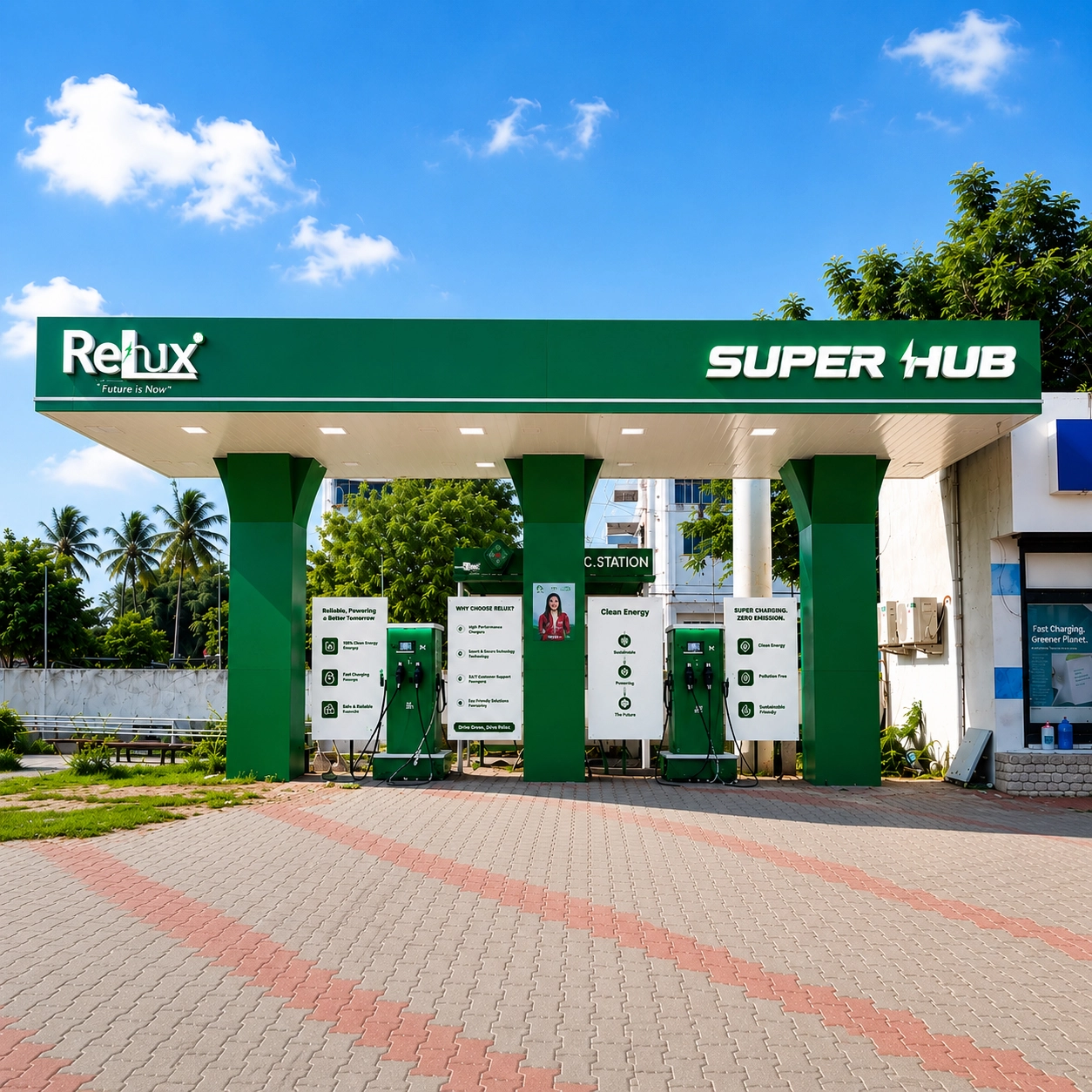
Fleet charging
Electric bus depot charging
Charging infrastructure for e-bus depots and intercity routes — high-power chargers built for continuous, high-frequency bus charging and overnight schedules.
Talk to the fleet teamWhat Relux builds
240 kW+ depot chargers
High-power stations rated 240 kW and above, built to withstand continuous, high-frequency bus charging across daily transit routes.
Scheduled overnight charging
Fleet software automates overnight schedules so every bus is ready for deployment each morning, with central visibility across depots.
Intercity & opportunity charging
The same high-capacity infrastructure supports intercity e-buses at terminals and highway hubs.
Key numbers
Context for Tamil Nadu operators, from public reports.
| Fact | Detail |
|---|---|
| Chennai MTC e-buses | 130 AC e-buses flagged off on 25 Aug 2026 (Alandur and Central depots) — the first batch of a 750-bus phase 2, after 625 e-buses in phase 1 |
| Depot charging rule | Ministry of Power 2024 guidelines call for at least 240 kW of charging capacity at e-bus depots |
| PM e-Bus Sewa | Central scheme for 10,000 e-buses in cities on a PPP model |
Frequently asked questions
What charger power do electric bus depots need?
Buses have large batteries, so depots use high-power DC chargers — Relux installs stations rated 240 kW and above, in line with the Ministry of Power guidance of at least 240 kW at e-bus depots.
How long does an electric bus take to charge?
Higher-capacity stations (240 kW and above) bring large-vehicle charging under an hour, compared with several hours at lower capacity; overnight depot schedules fill buses for the next day.
Can buses charge at the same stations as cars?
Yes — they use the same type of station, but higher-capacity hubs charge them much faster.
Electrifying your fleet?
Share your vehicles, routes and depots — Relux will size the charging.